

Hello, this is HDC.
Recently, for the manufacturing industry, the word ‘future’ is no longer a distant story.
Additive Manufacturing (AM) Centered on technology, noticeable changes are already taking place across production methods, supply chains, and the entire industrial ecosystem.
In this post Hannover Messe 2024Through the latest examples of Large-Scale Additive Manufacturing (LFAM) covered in,
CEAD, Siemens, HaddyI would like to introduce the future of manufacturing that we are building together.
especially Microfactory Let's take a look at why this concept is gaining attention and what significance it holds for the industry as a whole.
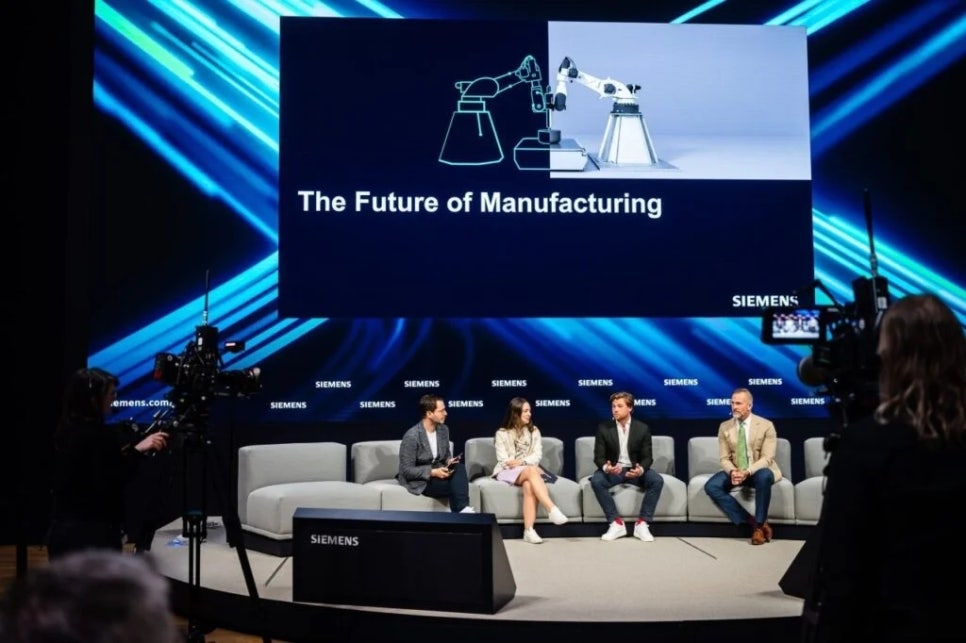
At this Hannover Messe, beyond simply discussing the future of manufacturing,
That future The fact that it is already becoming a realityMeaningful conversations took place that demonstrated [this].
In a panel discussion moderated by Markus Obermeier, Senior Manager of Additive Manufacturing at Siemens, key figures leading the Large Additive Manufacturing (LFAM) ecosystem gathered to discuss how technology and partnerships are transforming the industry as a whole.
At this place Jay Rogers, CEO of Haddy; Stefanie Frank, Vice President of Mechanical Systems at Siemens Digital Industries; and Lucas Janssen, CEO of CEAD The back was together.
The furniture industry is now ready for change.
The existing furniture manufacturing industry was slow, inefficient, and physically distant from consumers.
Haddy CEO Jay Rogers expressed this as follows.
“
It takes about a year to manufacture furniture in Southeast Asia and ship it worldwide.
Furthermore, it is difficult to predict quality or lifespan.
“
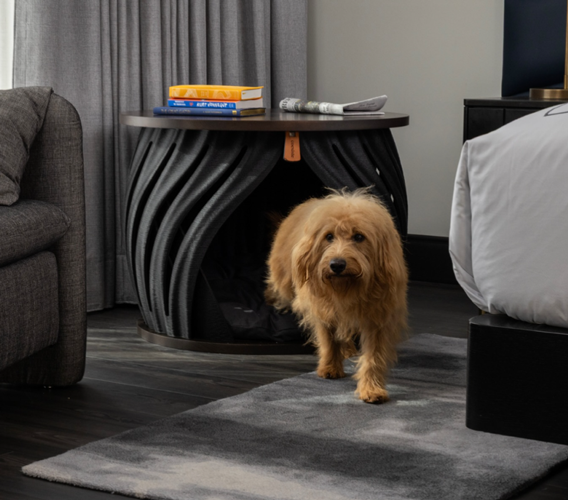
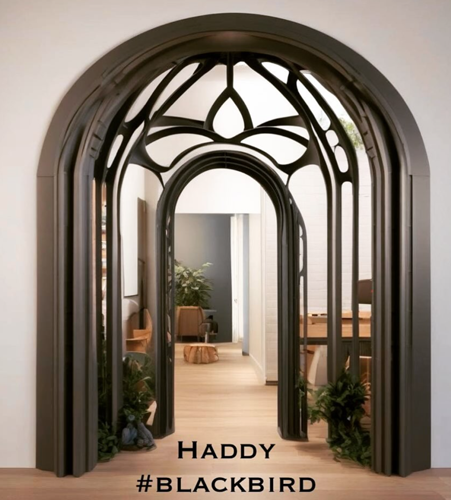
At this, Haddy Large-scale additive manufacturing (LFAM) Digitizing furniture design and production using technology, and
We have introduced a method of rapid production close to the consumer.
The production structure, which used to flow solely through global supply chains, has transformed into a hyper-local and agile system thanks to 3D printing.

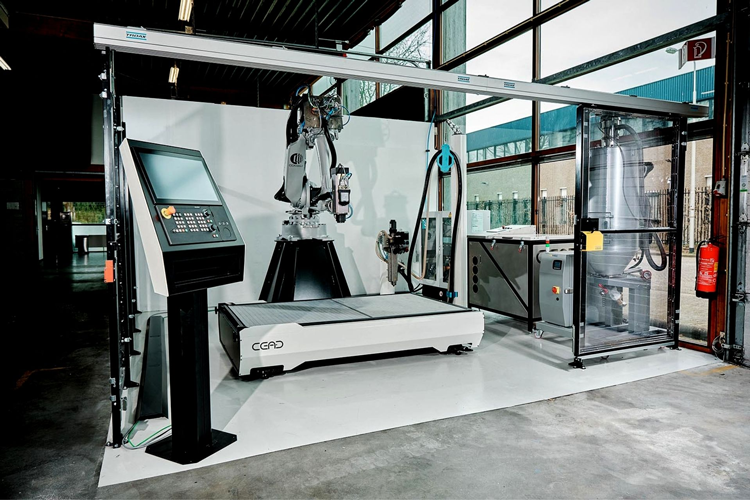
At the center of this change CEAD's Flexbot platformThere is.
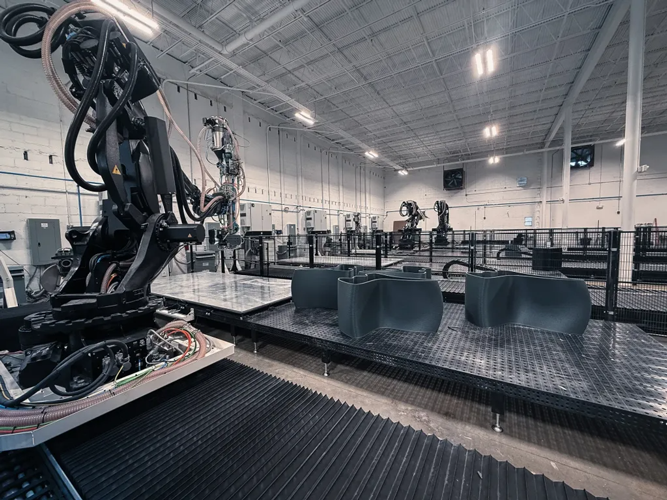
Based on Siemens' SINUMERIK controller, this modular large-scale 3D printing system ranges from custom architectural parts to
Various large structures, up to boat hulls, can be printed using thermoplastic pellets.
The Flexbot platform supports the completion of the entire part production process by combining not only additive manufacturing but also hybrid manufacturing technologies, and
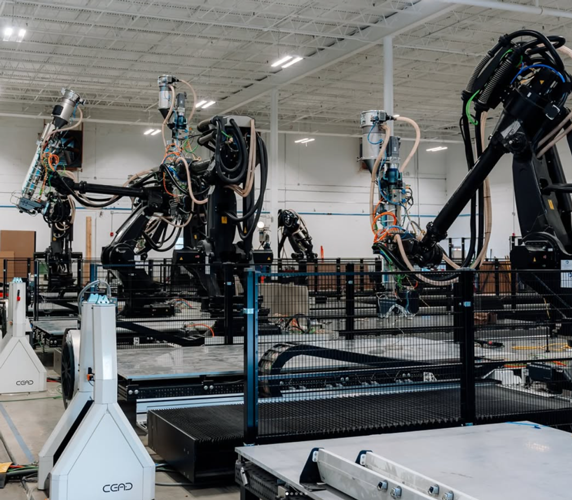
It has also been introduced as core equipment at Haddy's new Florida microfactory.
Currently, this facility is The place with the most commercial 3D printing robots installedIt is being recorded as.
CEAD CEO Lucas Janssen said this on the panel.
“
We are very proud to supply the core foundation for Haddy's microfactory.
“
|
▶ The Power of the LFAM Ecosystem Created by Collaboration
Large-scale innovation like this is Collaboration ecosystem It happens quickly inside.
CEAD's system integrates and controls additive manufacturing, CNC machining, sanding, etc., using Siemens' SINUMERIK,
End-to-end digital production processI have completed it.
Stefanie Frank of Siemens Digital Industries emphasized.
“
SINUMERIK is an open platform designed for the manufacturing of high-precision parts.
The differentiating point is that it can be utilized in both subtractive and additive manufacturing.
“
The collaboration between CEAD and Siemens has continued for over eight years, and both CEAD's Flexbot and Flexcube are controlled in real-time using SINUMERIK. This enables the integration of complex multi-processes and provides automated end-to-end solutions.
▶ Why Microfactories Are Important
Microfactories are not just a technology trend.
It symbolizes a fundamental shift in manufacturing philosophy regarding “what, where, and why” is made.
Microfactories, which are compact, flexible, and scalable, enable production close to consumers, and
In the case of Haddy, 30 million people live within a 6-hour radius of the microfactory located in St. Petersburg, Florida.
Haddy adopted CEAD's 8 Flexbots,
We are eliminating emissions and delays caused by global transportation, reducing resource waste with LFAM technology, and realizing a circular economy.
Another major advantage is the ability to flexibly handle everything from multi-product, small-batch production to mass production.
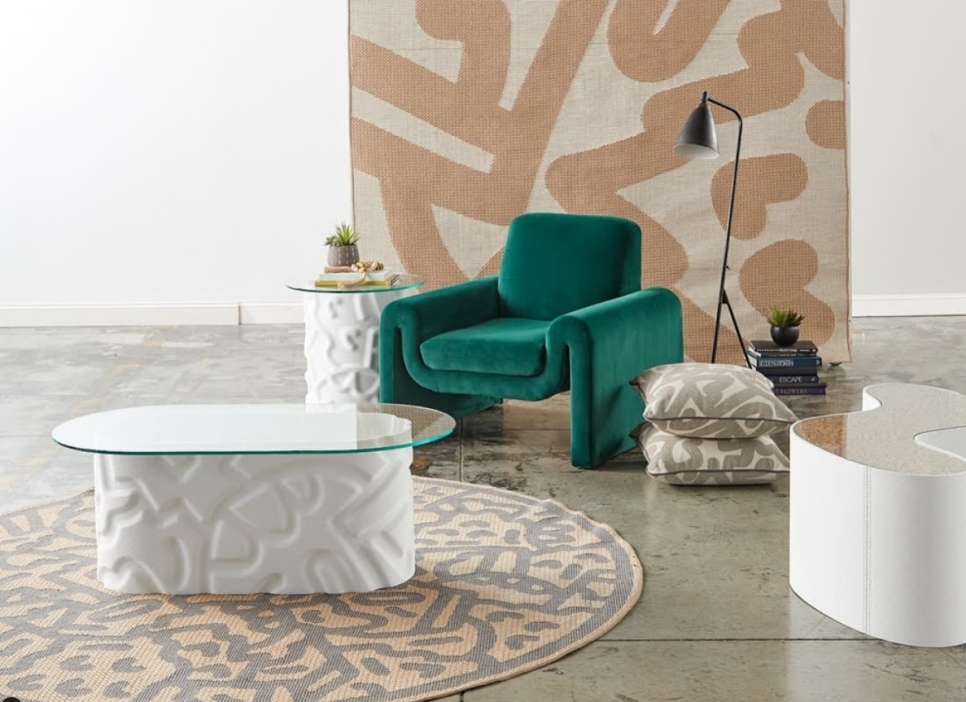
Haddy actually received a furniture set designed by a British designer for Siemens as a file and completed the printing and assembly in just 24 hours.
Here, the example completed by combining Carbon 3D's 3D-printed cushion with a solid wood tabletop clearly demonstrates the potential of the microfactory.
▶ AI and Additive Manufacturing, a Natural Combination
All three panelists predicted that the role of AI will grow increasingly larger in the future.
CEAD is preparing AI-based process control, predictive maintenance, and generative design tools through data logging systems.
Haddy aims to shorten the time from idea to product by utilizing AI to enable intuitive furniture design.
“
Now, when a designer says their idea, based on that, beautiful
The era has come to create functional furniture.
That is the future promised by AI, precision robotics, and additive manufacturing technology.
– Jay Rogers, Haddy CEO
“
Siemens is also accelerating human-machine collaboration through AI-based industrial copilots and value chain optimization.
▶ Transformation expanding across industries
Not limited to the furniture industry, CEAD supports manufacturers in various industries, such as shipbuilding, construction, and automotive, in establishing microfactories.
Their strength lies in continuously developing together with partners based on actual on-site demand.
A representative example is the Maritime Application Center (MAC) recently established by CEAD.
Here, we are conducting research in cooperation with key companies in the shipbuilding industry to print large boat hulls using LFAM technology.
This is a prime example of CEAD co-developing innovation with partners to address industry-specific challenges.