

The parts used in high-performance racing cars are not just simple lumps of metal.
It must withstand extreme heat, be produced on a fast cycle, and even take precise post-processing into account.
The case study I will introduce today is a racing car parts manufacturing project conducted by ERM Fab&Test.
ERM reportedly had to solve three key challenges—high-temperature heat resistance, fast delivery, and low cost—while carrying out this project.
I wonder how they approached it?
▶ Case Study of Manufacturing Racing Car Parts That Withstand High Temperatures
Case study developed by ERM
ERM Fab&Test is a specialized company providing innovative solutions in the field of metal additive manufacturing.
We support the introduction of 3D printing technology and integrated metal-plastic technology for manufacturers, educational institutions, and defense-related companies, and
We assist with overall technology integration from prototype development to the mass production stage.
This project originated from a client in the automotive industry.
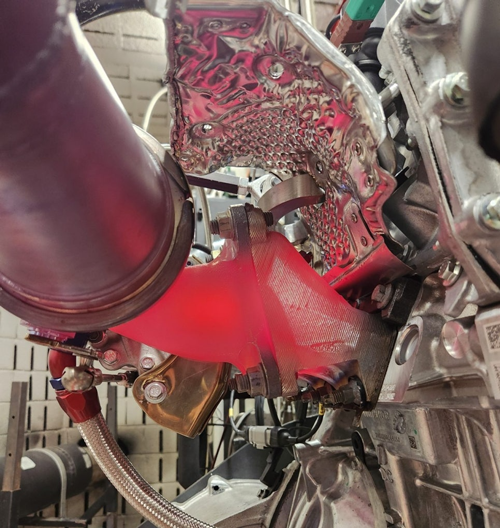
ERM is Produce racing vehicle parts capable of withstanding temperatures exceeding 800 degrees in a short period of timeI received a request to do this.
The requirements were clear, Fast delivery, limited budget, high heat resistanceThat was the key point.
▶ Demanding industries, demanding parts
Racing industry customers Metal parts capable of withstanding high temperatures of over 800 degreesThis was necessary.
However, existing traditional manufacturing methods were not a realistic alternative because they were time-consuming and excessively expensive.
In addition, if the near-net shape of the part to be actually used is machined directly using CNC, Alignment issues and repetitive setupProductivity decreases due to this and
There were frequent issues with delayed delivery.
▶ Securing excellent thermal performance even within limited time and budget
The parts produced in this project are It had to be delivered within a short period of time, and had to have excellent high-temperature resistance, and
Maintains precise dimensional tolerances even during post-processingWe had to do it. At the same time, we also had to minimize overall production costs.
The ERM team to meet this complex requirement Print the parts and design custom fixtures to facilitate precision machining.did,
We applied an optimal process design to increase processing efficiency.
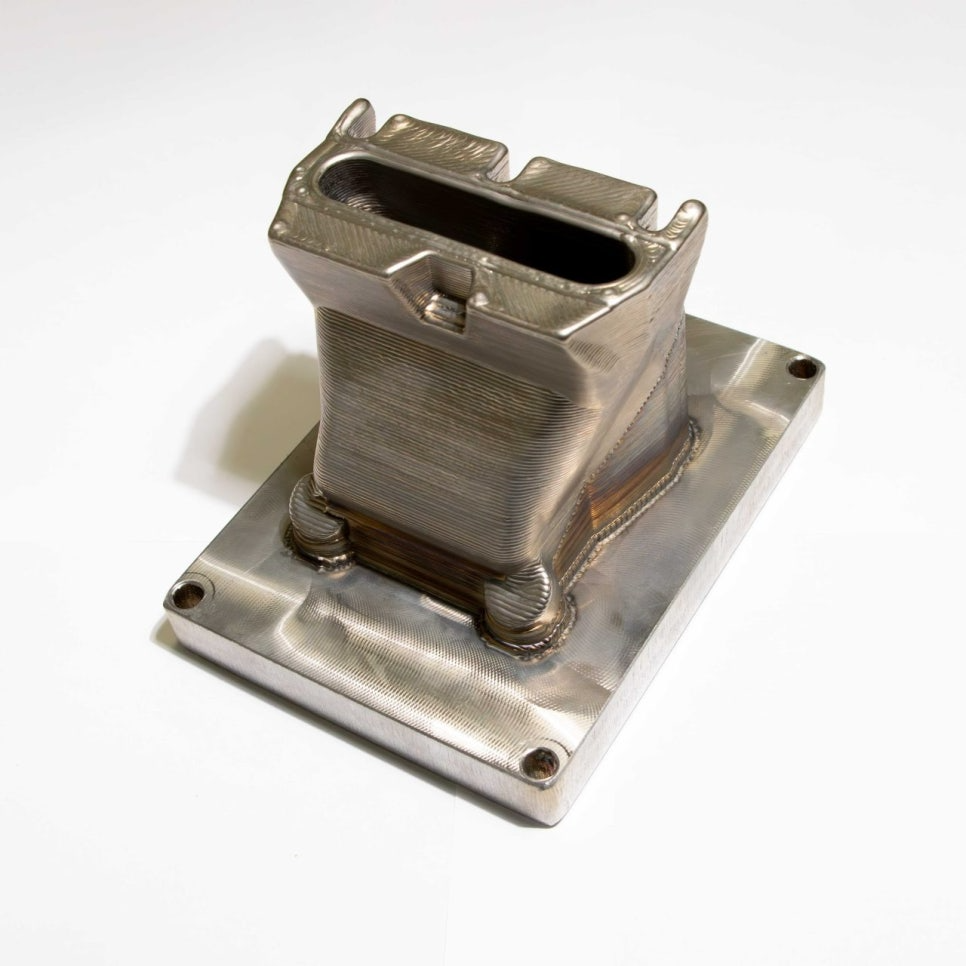
| Component + Support Output
This process outputs a nearly finished shape, making it ready for reprocessing within a few hours. |
Precise Support Output
Support allows parts to be accurately secured at the desired angle in the machining center. |
Parts machining
By combining output and machining in a hybrid manner, the number of tool types can be reduced, rework can be simplified, and overall production time can be significantly shortened. |
This part is Inconel 718 alloyBy utilizing the Meltio M600 device Direct output with 316L support structure on a 304L stainless steel baseIt has been done.
– Dimensions: 126 × 112 × 134 mm
– Design Optimization: No support, no internal post-processing required
Afterwards, through the Tormach 1100MX equipment Post-processing is performed to ensure precise machining angles and tool accessibility.Production was carried out with even that in mind.
▶ Achieving both performance and cost with a dual-material strategy
Another key aspect of this project is precisely... Dual-Material StrategyIt was.
Thanks to Meltio's flexible dual-wire system Cost efficiency and performance optimizationWe were able to achieve both at the same time.
The key achievements obtained through this strategy are as follows:
- Production speed up to 3 times faster than conventional manufacturing methods
- Optimized processing flow
- Cost savings of up to 70%
- Achieving high repeatability and production scalability
▶ Fast and accurate processing, simple setup, seamless process flow
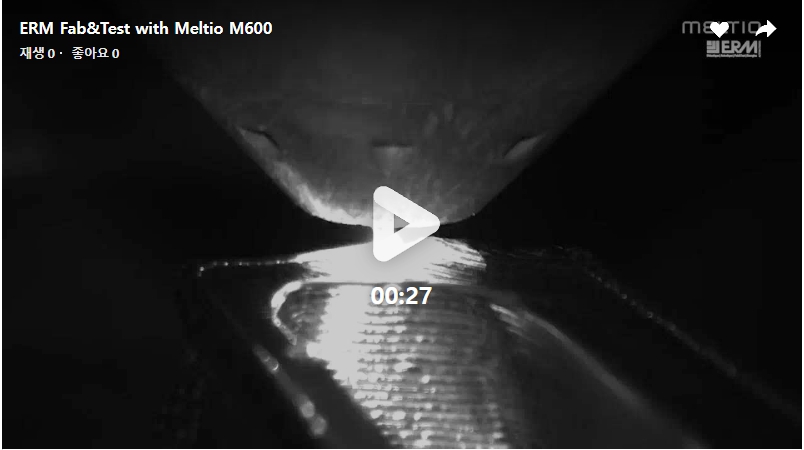
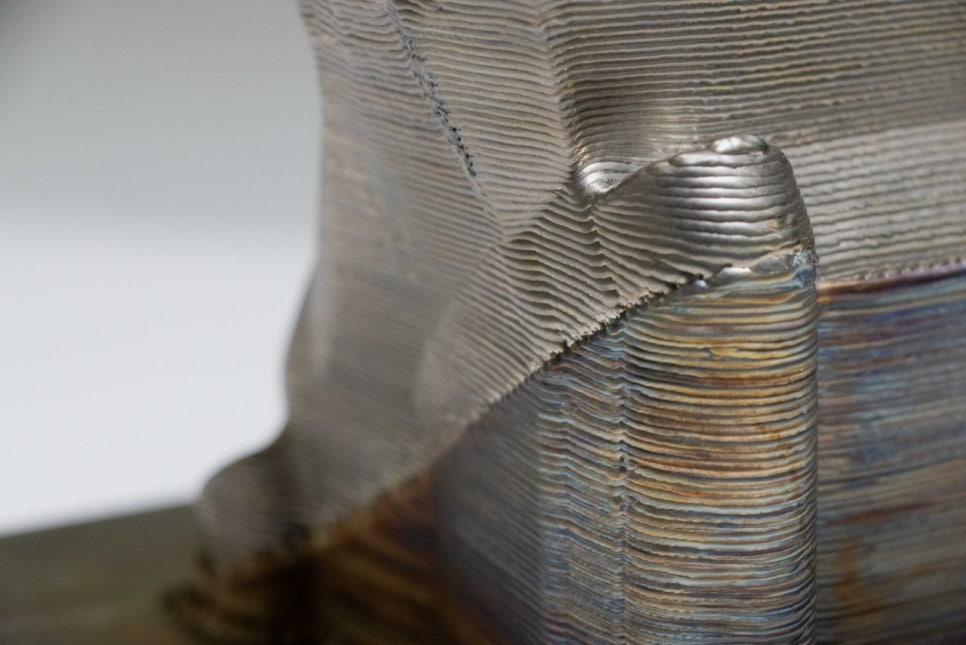
As such, Meltio's dual-wire system allows for faster and more stable high-performance metal parts,
And it served as a powerful solution that allows for making it more affordable.
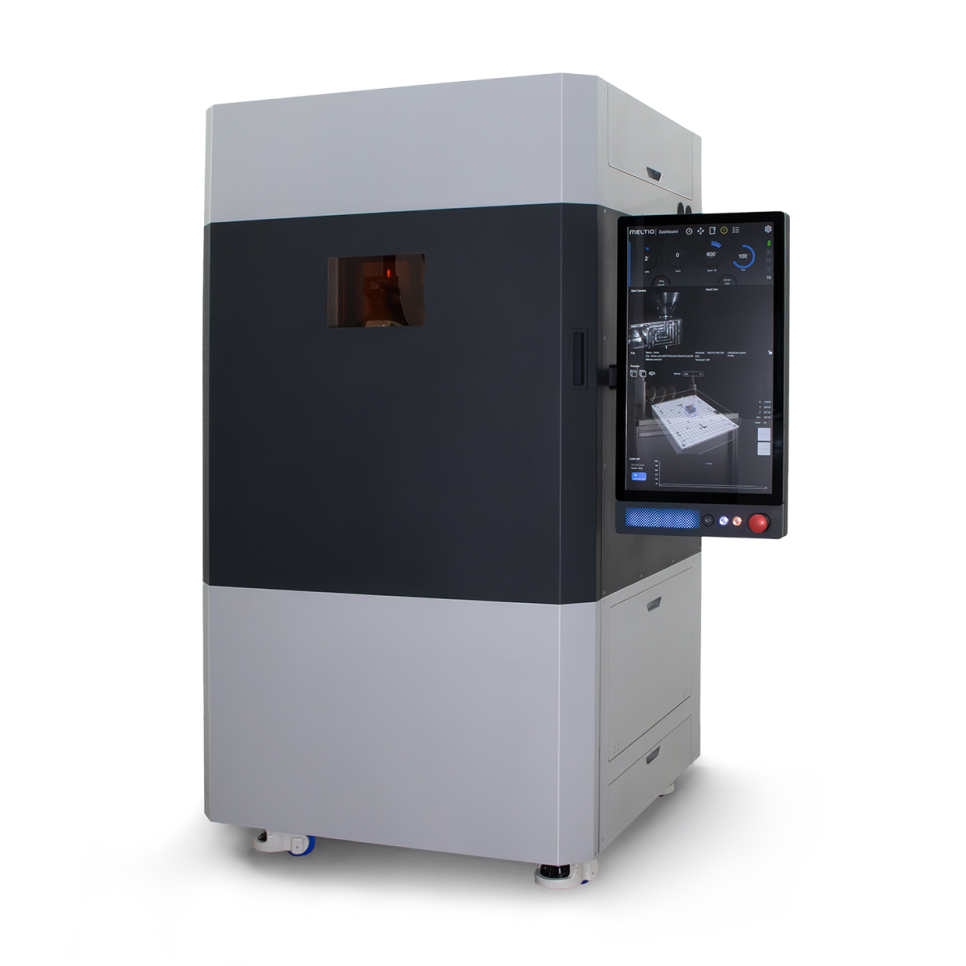
- Equipment used: Meltio M600
The Meltio M600, equipped with a built-in 3-axis probing system and workholding function, is a metal 3D printer optimized for manufacturing processes.
- Applicable Industries: Automotive
It is designed with a structure capable of on-site customized production and immediate output when needed.
- Materials Used: Stainless Steel 316L + Inconel 718
The wire feed method is a safer and more economical alternative to the powder-based method.
- Output time: Total 18 hours 41 minutes
This project holds significance beyond simply having successfully manufactured a single component.
This is because it demonstrated through practical industrial examples how hybrid manufacturing methods can innovate traditional processing-centered production methods.
For high-difficulty parts requiring complex geometries, fast delivery times, and precision, Meltio's solutions can be an excellent alternative.
Curious to learn more about the possibilities of additive manufacturing? We will continue to introduce them through various case studies!