

Hello, this is HDC.
Today, additive manufacturing technology capable of solving supply chain problems, particularly WAAM (Wire Arc Additive Manufacturing),
I will explain how we can contribute to solving delivery delays and productivity issues.
Let's take a look at how the challenges facing the industry are being addressed, focusing on an interview with MX3D CEO Gijs van der Velden.
Robotic WAAM is high-quality medium and large metal parts,
It is a solution suitable for in-house production.
How long does it take to deliver urgently needed engineering products such as valves, pumps, and pressure vessels?
What about fittings or flange parts made of special alloys? Orders? Months?
While such long lead times are often taken for granted, they become a huge headache in unexpected maintenance or repair situations.
It can even lead to revenue losses.
In this situation, WAAM (Wire Arc Additive Manufacturing) can be an effective solution for shortening delivery times.
Gijs van der Velden, CEO of MX3D, emphasizes that WAAM is a solution that can solve supply chain problems.
Familiar yet new technology, WAAM
WAAM is not an unverified technology fresh out of the latest laboratory.
It is a reliable additive manufacturing (AM) technology that has been used in various industries for a long time since it was first patented in 1920.
Basically, it is a form of arc welding, a process already familiar to the global metalworking industry.
There are two reasons why WAAM has been receiving attention recently.
First, the development of CAD/CAM software.
Second is the emergence of advanced robot systems.
Thanks to this, today's WAAM systems have become capable of printing metal parts close to their final shape, and
It is establishing itself as a solution capable of innovating everything from cost and lead times to material efficiency and local on-demand production.
MX3D is leading the adoption of WAAM across various industries, centered in the Netherlands, and
Representative examples include a 12-meter-long stainless steel bridge installed over the Amsterdam canal, DED parts for BMW,
There is research on 3D printing of carbon steel pipe connectors conducted with JGC of Japan, etc.
▶ Firm positioning for the energy industry
MX3D targets the energy industry as its core market.
This is because WAAM demonstrates distinct strengths in specialty materials and low-volume production parts.
For example, materials such as duplex stainless steel and high corrosion-resistant alloys can be produced quickly, and
These materials are very difficult and expensive to cast.
Van der Velden said, “Thanks to WAAM, customers can quickly secure the parts they need, and,
He explains, “This will bring significant changes to the entire supply chain.”
▶ Shifting Perceptions of the Valve Industry
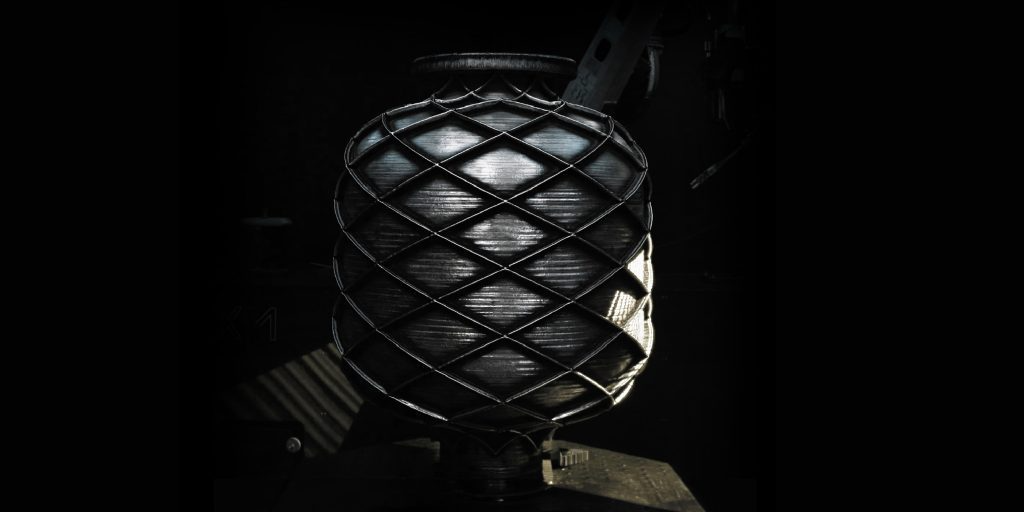
WAAM provides benefits such as on-demand production tailored to requirements, uses, and application cases across various industries.
MX3D participated in the Valve World Expo & Conference to understand the needs of the valve and flow control industry.
At this event, the economic benefits of WAAM were positively evaluated.
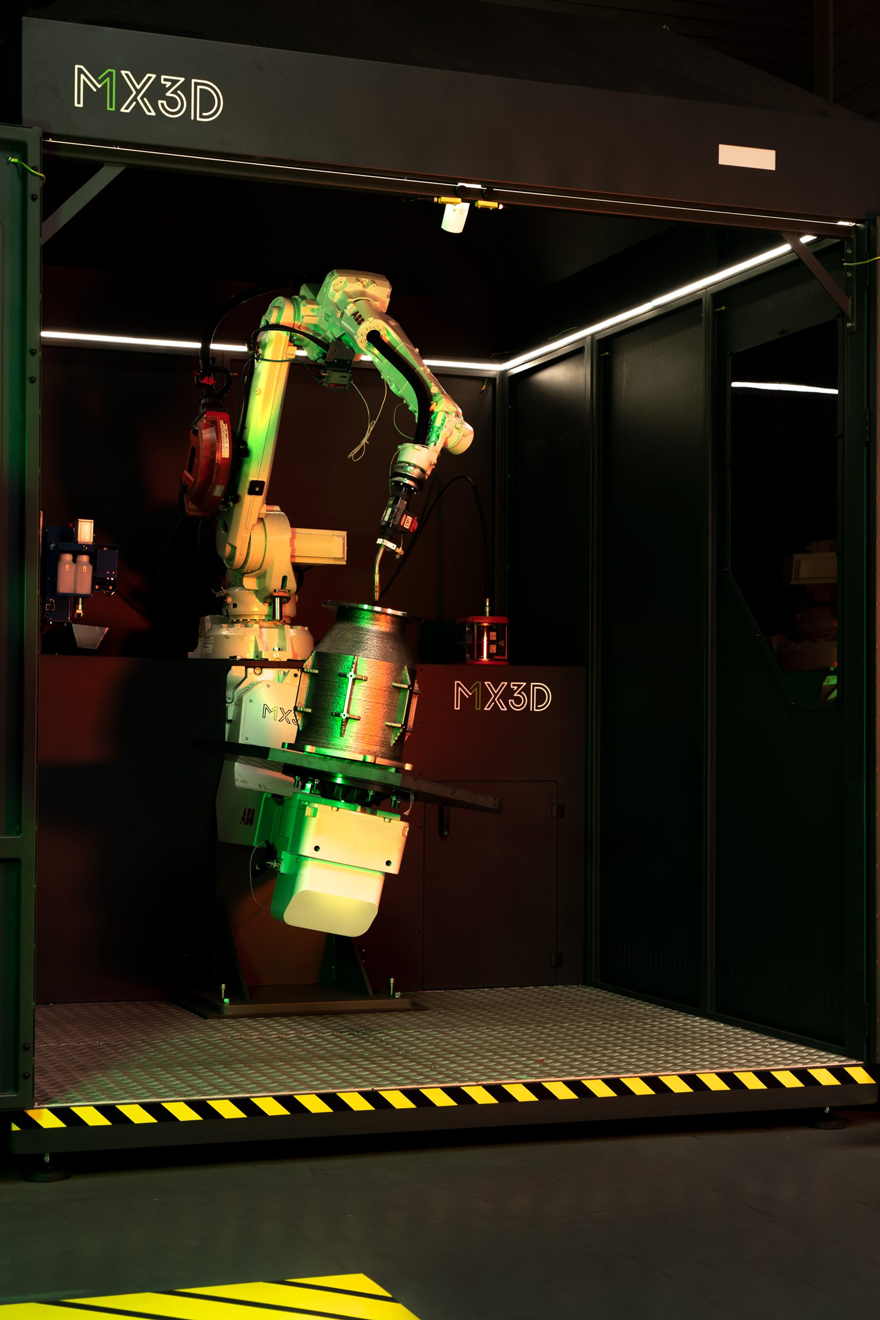
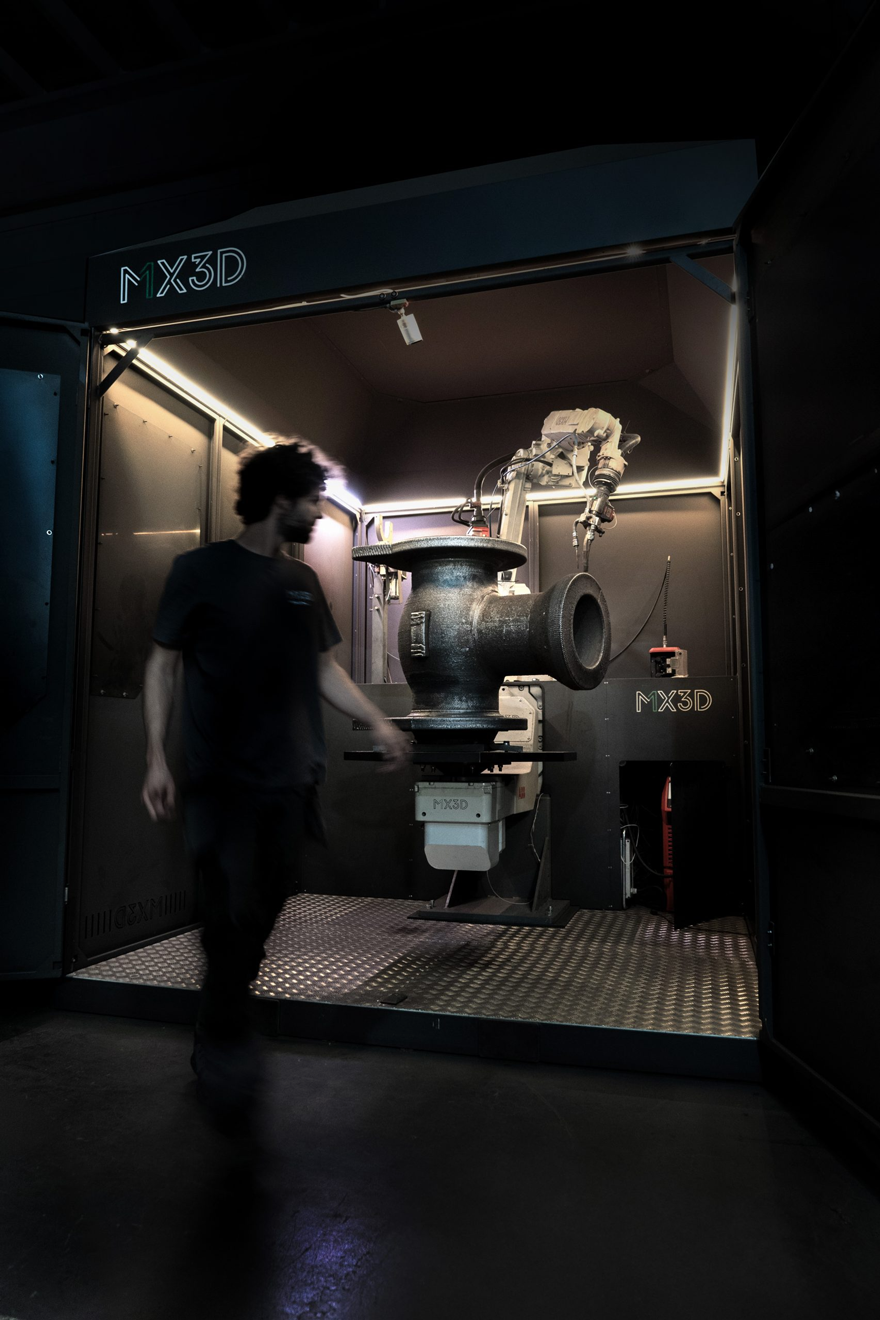
People were very surprised by the fact that the WAAM system could output a 100kg valve body within a few days.
Of course, final finishing is necessary, but this follows the same procedure as casting.
Van der Velden adds.
In emergency production, up to 80% of high-value materials such as duplex stainless steel are discarded as waste during processing, but
WAAM can reduce such waste and even lower energy consumption and emissions.
The valve industry, in particular, has long taken long lead times for granted, but
Thanks to WAAM, we have confirmed that “ordering a valve and receiving it within a few weeks” can become the new standard.
▶ WAAM's Target Market
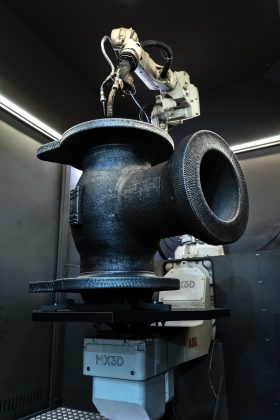
This 750kg WAAM valve body is It was printed in just 180 hours. The material properties are similar to those of forged parts. |
WAAM shows great potential in the fields of hydrogen energy, cryogenic industry, and special equipment.
It is receiving significant interest, particularly from companies that produce specialized parts rather than mass-produced items. Van der Velden said, “We have been in discussions with various companies regarding valve production so far, and "WAAM is also advantageous for maintaining appropriate inventory levels," explains [he/she].
If you secure just a 3x3m space, you can produce parts in-house, and This helps simplify high inventory costs and complex production processes. |
Changes in the producing entity, and independence
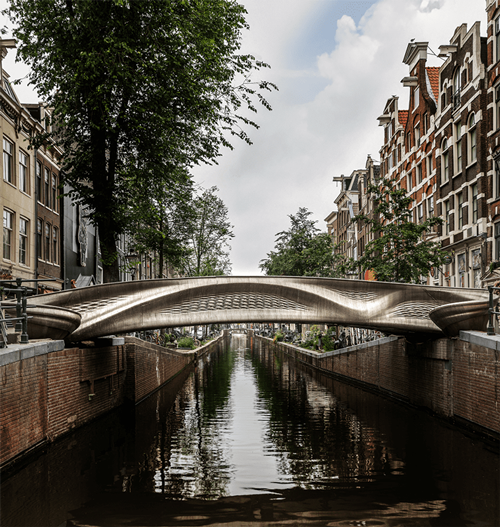
MX3D produces original WAAM products that push the boundaries of technology every year.
This 3D-printed stainless steel bridge was installed in one of Amsterdam's famous canals.
Interest is also growing among companies looking to produce parts in-house without relying on OEMs (Original Equipment Manufacturers).
This is especially true in industries where long lead times are fatal.
Van der Velden is
“
By adopting a WAAM system, companies can secure a more independent position, and
You can completely change the way you operate your supply chain.
“
He emphasizes that
End users holding intellectual property rights (IPR) can also realize self-sufficient manufacturing through WAAM.
WAAM Quality and Standards
WAAM already meets major international standards such as API-20S, DNV-BT-203, and ASME Section IX.
Standardization for 3D printing processes is actively underway, and in terms of pressure retention capability, material properties, and quality, it is equivalent to or
It is showing better results.
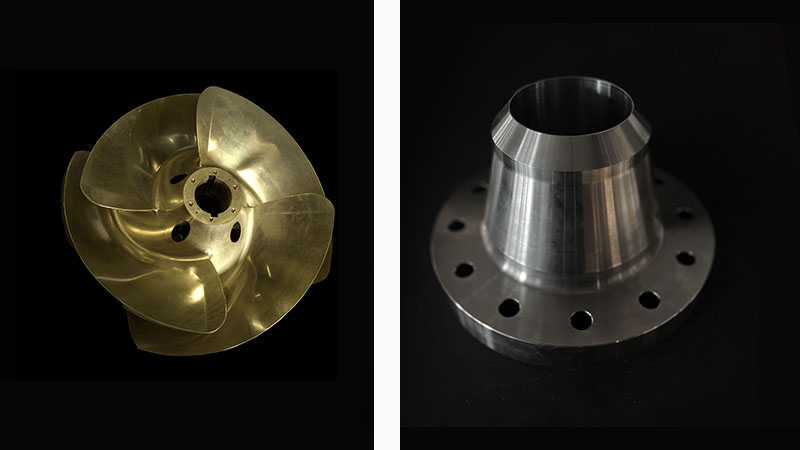
Such unique piping and pump parts can also be manufactured quickly, including those made of special alloys.
▶ Surface Quality and Real-World Applications
WAAM prints retain fine grain due to the nature of the welding process, but this is comparable to that of castings.
If necessary, a smooth surface can be obtained by machining only about 0.5 to 1.5 mm.
Although the surface quality is slightly rougher compared to the Laser DED method, WAAM is more than 10 times faster in terms of productivity,
For customers for whom delivery times are critical, WAAM is a better solution.
 |
 |
WAAM systems provide companies with greater independence and can 혁신적으로 transform the way supply chains are operated.
Gijs Van der Velden:
Our technology provides customers with the capability to rapidly manufacture parts made of materials that are difficult to secure through casting, such as duplex stainless steel or high-grade alloys.
▶ MX3D's Approach
MX3D designs customized WAAM systems and also performs in-house parts manufacturing and prototype production.
We ensure safety and consistency through multi-sensor-based quality monitoring and data analysis, and
We develop innovative prototypes every year to discover new business cases.
Van der Velden said, “We are always ready to talk to solve the problems our customers want solved,” and
"If you need a perfect finish, a customized solution is the best choice, but if speed is important, WAAM is the best choice," they say.
Source: Stainless Steel World, “How WAAM could reduce supply chain blockages”
(View original text: https://stainless-steel-world.net/how-waam-could-reduce-supply-chain-blockages/)