

Hello, this is HDC.
Today, I would like to introduce some interesting content that will give you a completely new perspective on mold repair and spare parts production methods.
Tool & die shops are a solid foundation of the manufacturing industry, but they are facing new challenges such as increasingly complex geometries, fast delivery times, and material efficiency.
In this post, the limitations of traditional methods and,
We examine how Meltio's wire-to-laser metal additive manufacturing (AM) technology is going beyond this.
From complex cooling channels to repairing high-hardness materials, this is packed with insights that can be immediately applied in real-world manufacturing environments, so I recommend reading to the end!
Molds and dies are the core of the global manufacturing industry.
Playing an indispensable role in major industries such as automobiles, aerospace, oil and gas, and defense,
It is an essential component for precisely cutting and shaping materials to produce high-quality parts.
These parts require increasingly complex shapes, strong materials, and fast delivery response.
However, it is difficult to keep up with these changing demands with existing manufacturing methods.
Metal additive manufacturing (AM), and specifically wire-laser direct energy deposition (DED), is emerging as a new solution that is shaking up existing methods, and
We are fundamentally changing the methods of mold manufacturing and repair.
Meltio is leading the change at the center of this technological innovation.
▶ Mold Design and Manufacturing Companies: The Roots of the Metal Manufacturing Industry
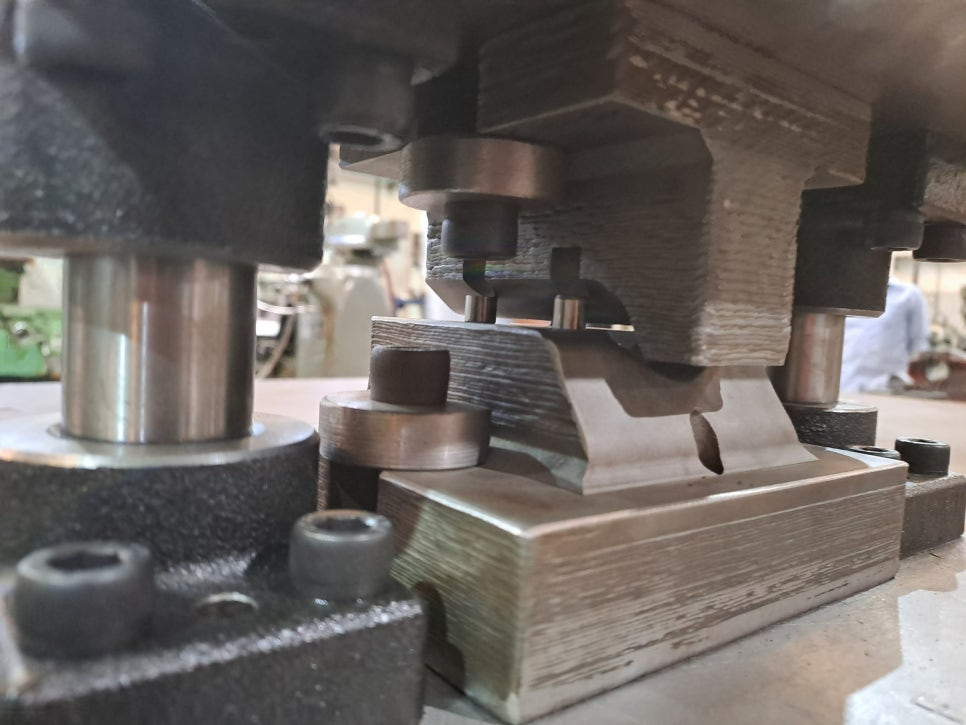
Companies that design and manufacture molds are spaces specialized in designing and producing molds and dies used in mass production.
Such facilities play a crucial role in manufacturing metal parts for a wide range of products, from consumer goods to industrial machinery, but their value is often overlooked.
Molds are manufactured in various forms as follows, depending on their intended use.
- Cutting & stamping dies Cutting and Stamping Dies: Used for mass production by cutting or bending metal plates.
- Drawing dies Drawing Die: Forming parts using shallow or deep drawing methods
- Hot stamping molds Hot Stamping Mold: Forming heated metal into a press mold
- Injection molds (plastic or metal) Injection mold (plastic or metal): Produces complex parts by injecting molten material
- Extrusion & blow molds Extrusion and Blow Molding: Used for forming hollow shapes like bottles or continuous profiles.
These processes utilize high-precision milling machines, lathes, wire EDM machines, and grinders, and high-strength materials capable of withstanding high temperatures, high pressures, and wear are essential.
▶ Limitations of existing technology amidst fierce market competition
Mold processing companies are facing an increasingly heavy burden:
- Cost and time pressure: Customers want fast, affordable, yet high-quality parts.
- Tool wear and material waste: Conventional CNC and EDM methods waste expensive materials and have short tool lifespans.
- Complex geometry and customized design: As part shapes become more complex and designs requiring integrated cooling channels increase, it is difficult to handle them with conventional cutting methods.
- Repair time delay: If the die is worn out or damaged, production delays occur, and traditional repair methods are slow and limited.
Shops operating without such advanced technology find it difficult to handle the ever-increasing demand for manufacturing or high-value-added contracts.
[Burden 1: Complex geometry and integrated cooling structure]
Problem
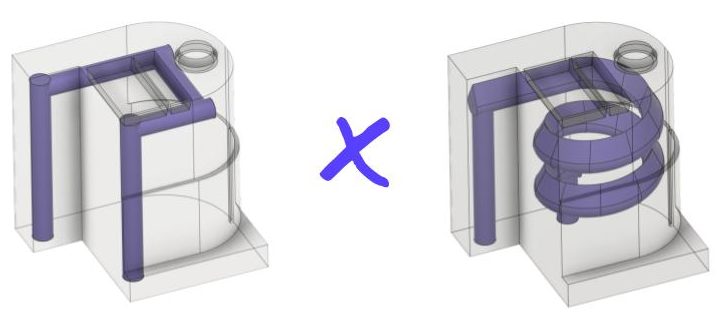
Modern molds must be designed with complex internal cooling channels. However, conventional machining methods such as CNC or EDM make it difficult to create such intricate and irregular structures, which leads to longer cooling times and accelerates mold wear.
Meltio's Solution
Meltio's wire-to-laser additive manufacturing allows for the direct, layer-by-layer construction of integral cooling channels within a mold, tailored to the design. It enables the free realization of curved, sloped, and near-surface shapes at required locations, and combines copper and steel to improve thermal conductivity and corrosion resistance.
result
- Reduce cooling phase cycle time by up to 80%
- Improves product quality by maintaining an even temperature distribution
- Reduction of cavity corrosion and component defects
[Burden 2: High material costs and tool wear]
Problem
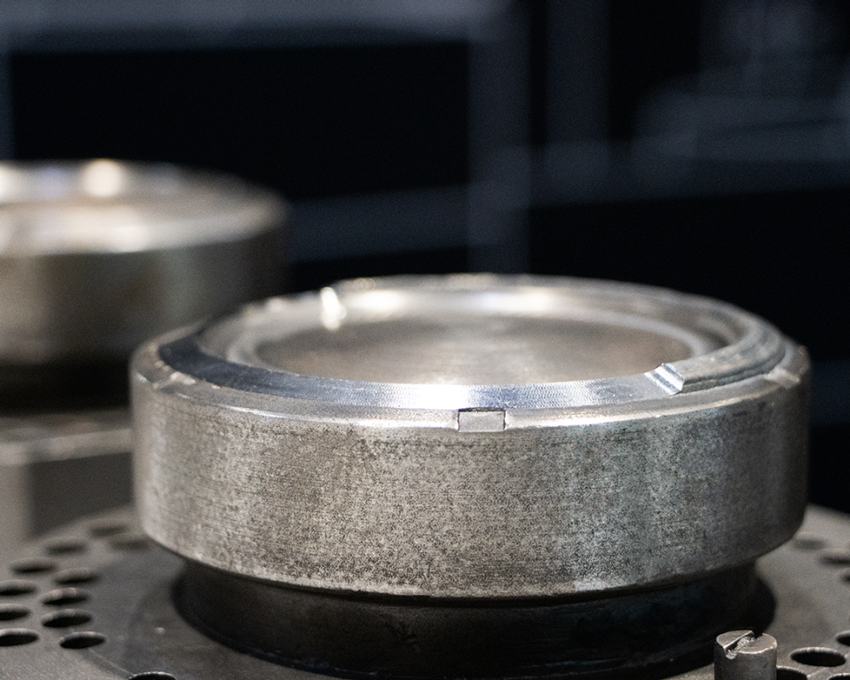
Conventional mold manufacturing methods tend to waste expensive special steel, and the frequent replacement of cutting tools increases costs and slows down production speed.
Meltio's Solution
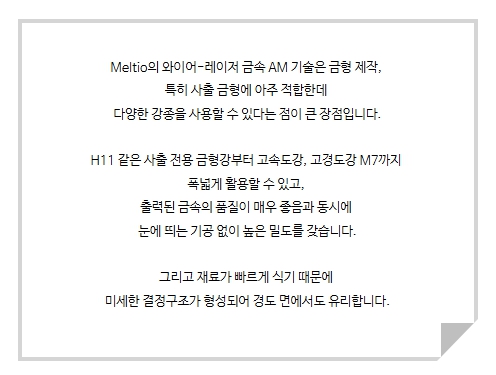
Meltio's additive manufacturing enables dual-material output, allowing high-hardness steel (such as M7) to be used for high-wear surfaces and ductile, low-cost materials for the interior, which is effective for cost reduction and mold life extension.
result
- Up to 50% material savings
- Reduction in CNC machining and tooling costs
- Improving shop productivity through the integration of additive manufacturing technology
[Burden 3: Long lead times and downtime due to wear and tear]
Problem
Damaged molds often require the entire mold to be remanufactured, leading to delivery delays and inventory burdens.
Meltio's Solution
Meltio's DED technology can directly restore worn areas, allowing for extended lifespan without the need to replace the entire mold.
result
- Reduced mold restoration time
- Minimize production interruptions
- Extension of the lifespan of high-wear molds and punches
[Burden 4: Shapes difficult to implement with existing equipment]
Problem
Parts that combine different materials or have complex internal structures are difficult to manufacture using standard CNC or casting methods.
Meltio's Solution
Meltio's wire-to-laser AM can be integrated into existing CNC equipment, allowing you to add complex additive manufacturing processes while maintaining your existing infrastructure.
result
- Able to secure orders for high-difficulty component production
- Streamlining prototyping and customization
- Improving shop flexibility and profitability
▶ Key Advantages of Meltio's Wire-Laser Metal AM for Mold Manufacturing Companies
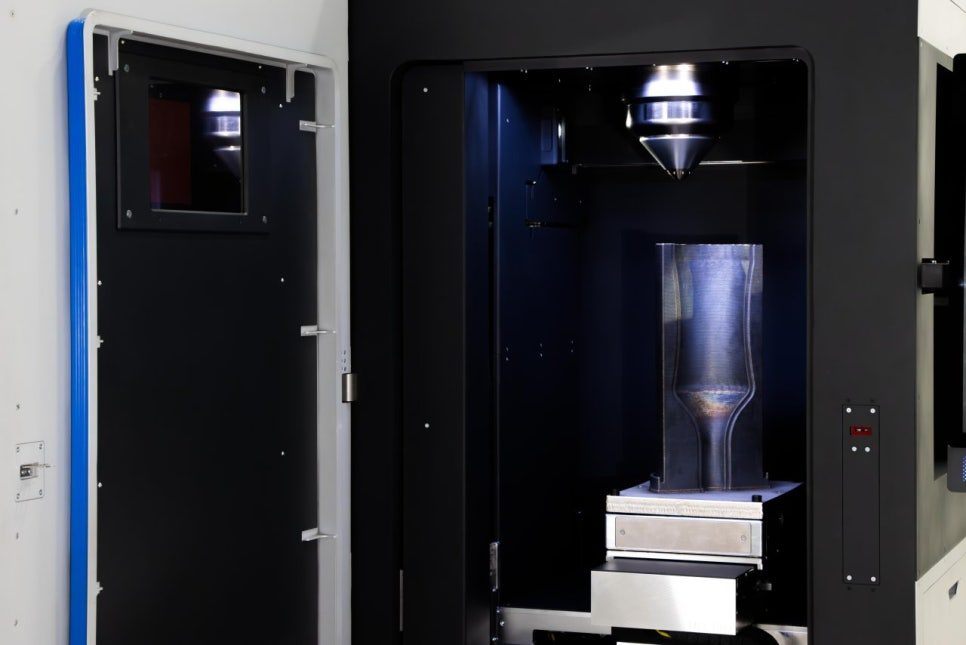
The advantages of using Meltio's technology in mold manufacturing companies are as follows.
- Multi-material printing that allows the use of various materials at once
- High precision and reliability
- 24-hour operation system
- Complex shapes can also be easily implemented
- Easy for field workers to learn
Wire-laser metal 3D printing is particularly powerful for producing high-performance molds that require cooling performance, internal precision structures, and lightweight designs, and when utilized with the Meltio M600, industrial robot integration kits, etc., it can establish itself as an optimized mold manufacturing solution for the field.
By expanding design freedom and optimizing materials to improve cooling efficiency, you can not only shorten cycle times but also raise product quality.
In addition to this
- Cost and material reduction
- Enhancing efficiency in rapid prototyping and small-batch custom product production
- High-durability materials (titanium, copper, aluminum, stainless steel, etc.) can be printed
- Minimize material waste
- Cladding work is possible by repairing only the worn parts, eliminating the need to replace the entire mold.
- Reduce cooling cycles by up to 80%
- Improved productivity through reduced maintenance cycles
It possesses these advantages and enables the realization of complex shapes and the production of parts using multiple material combinations, which were impossible with conventional cutting methods.
● What are the benefits of Meltio DED technology in terms of quality and sustainability?
| Sustainable operation | Improvement of mold life and quality |
| – Waste reduction
– Shortened cooling cycle and improved energy efficiency |
– Satisfies high-cycle SPI classification (grades 101–105)
– Uniform cooling of injection mold inserts, defect reduction, and quality stabilization |
▶ Manufacturing Strategy for Future Preparation
Now is the time for the mold manufacturing industry to evolve to the next level.
Amid market trends demanding complex shapes, short lead times, and high cost efficiency, the limitations of traditional methods are becoming evident.
At times like this, what is most important is a flexible yet powerful transition strategy.
Meltio's wire-to-laser metal additive manufacturing technology opens up various possibilities, such as cold die fabrication, repair of high-wear parts, and integrated AM and CNC operations, while keeping existing equipment intact.
Smarter, faster, and more precise.
Meltio provides the solution to make the entire mold manufacturing process much more efficient.
Turn your current worries into tomorrow's competitiveness.